

Hardcover Spiral Binding: How To Punch, Size And Bind Rigid Covers Correctly
Leave a message
A hardcover spiral notebook is not simply a soft-cover notebook with thicker front and back panels. Once rigid board, lamination, wrapped paper or another cover construction is introduced, the punching load, hole-edge behavior, spine clearance and finished-book movement all change.
That is why hardcover spiral binding should be treated as a construction problem, not only a cover-design decision. The cover must be compatible with the punch process, the page block must fit the selected coil or Wire-O, and the finished book must turn cleanly without the rigid cover fighting the spine.
YPS manufactures both binding elements and finished notebook products, including custom notebooks, plastic spiral coil and Double Loop Wire-O. This guide focuses on the technical decisions that connect those components.
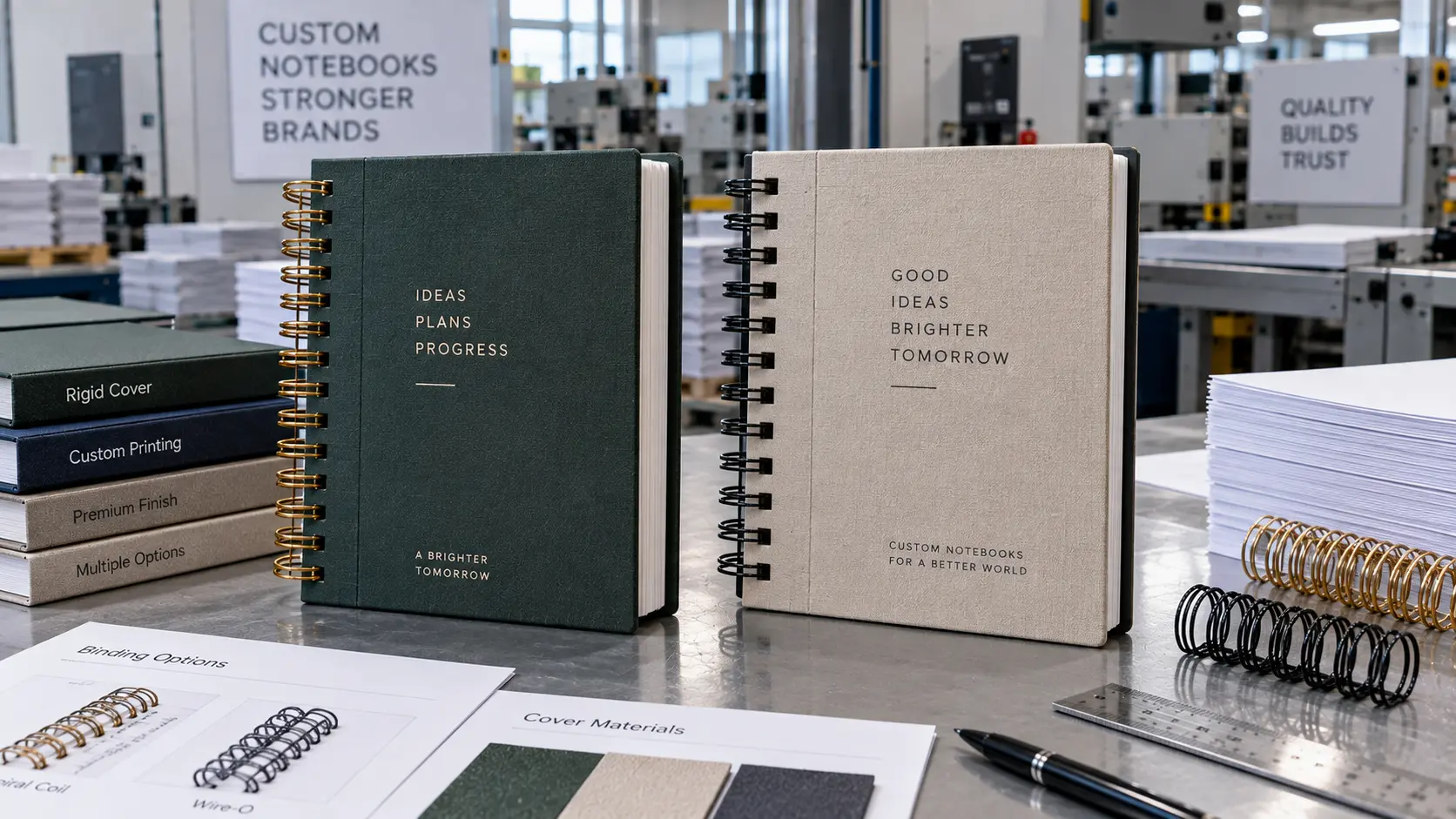
Hardcover Mechanical Binding Is Different From Adhesive Hardcover Binding
Hardcover books can be built in several ways. Traditional case binding and thermal or adhesive systems attach a page block to a rigid case through a glued spine structure. Spiral and Wire-O hardcovers are different: the cover and pages are mechanically connected through a punched hole pattern.
That changes the engineering priorities. Instead of adhesive activation and spine curing, the critical questions become:
- Can the cover be punched cleanly without cracking or delaminating?
- Is the hole pattern positioned far enough from the board edge?
- Does the binding diameter provide clearance for the rigid covers and page block?
- Can the covers rotate without scraping or forcing the binding element?
- Will the finished cover stay aligned with the interior pages?
1. Define the Cover Construction Before Punching
"Hardcover" can describe several constructions. A cover may use paper-wrapped board, laminated printed board, coated board, synthetic covering material, or another layered structure. Those layers affect punching differently.
Before a production run, record the actual cover build rather than only the finished thickness. A lamination can lift around a poorly formed hole. Wrapped material can pull if the punch edge is rough. Dense board can require different punching equipment from the interior pages.
For finished-product sourcing considerations, YPS's hardcover notebook sourcing guide covers board, cover and supplier decisions from the buyer side.
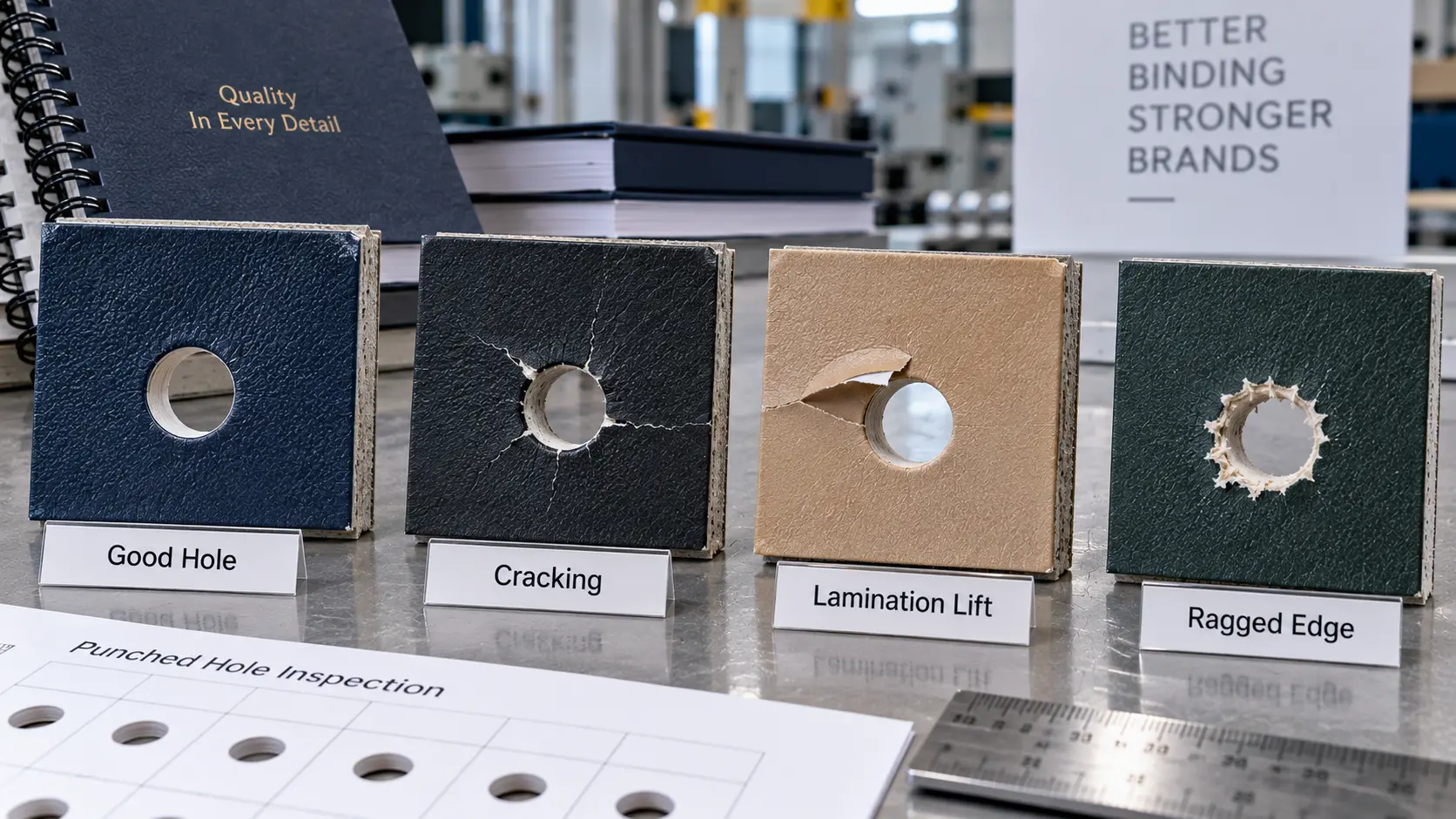
2. Test the Punched Hole on the Finished Cover Material
Do not approve the cover based only on an unpunched mock-up. The hole itself is part of the finished product.
Inspect for:
- cracked board or coating around the hole;
- lamination lifting from the cover surface;
- ragged wrapped-paper edges;
- holes that deform instead of cutting cleanly;
- inconsistent distance between the hole line and cover edge;
- cover warping after punching.
If the cover performs poorly, increasing force is not the only solution. The factory may need to change the punch stack, die condition, cover construction or punching method. YPS's article on preventing torn holes in spiral binding explains the same principle for paper and mixed-material book blocks.
3. Punch Covers Separately When the Material Requires It
Interior paper and rigid covers create different loads. Combining them into one punch stroke can make it harder to control the result, especially when the cover is much denser than the text block.
A separate cover punch test makes it easier to evaluate:
- hole shape;
- edge distance;
- material cracking;
- die loading;
- alignment against the interior pattern.
For production equipment, review the YPS paper punching machine range and confirm the actual cover material with the equipment supplier before assuming a rated paper capacity also applies to rigid board.
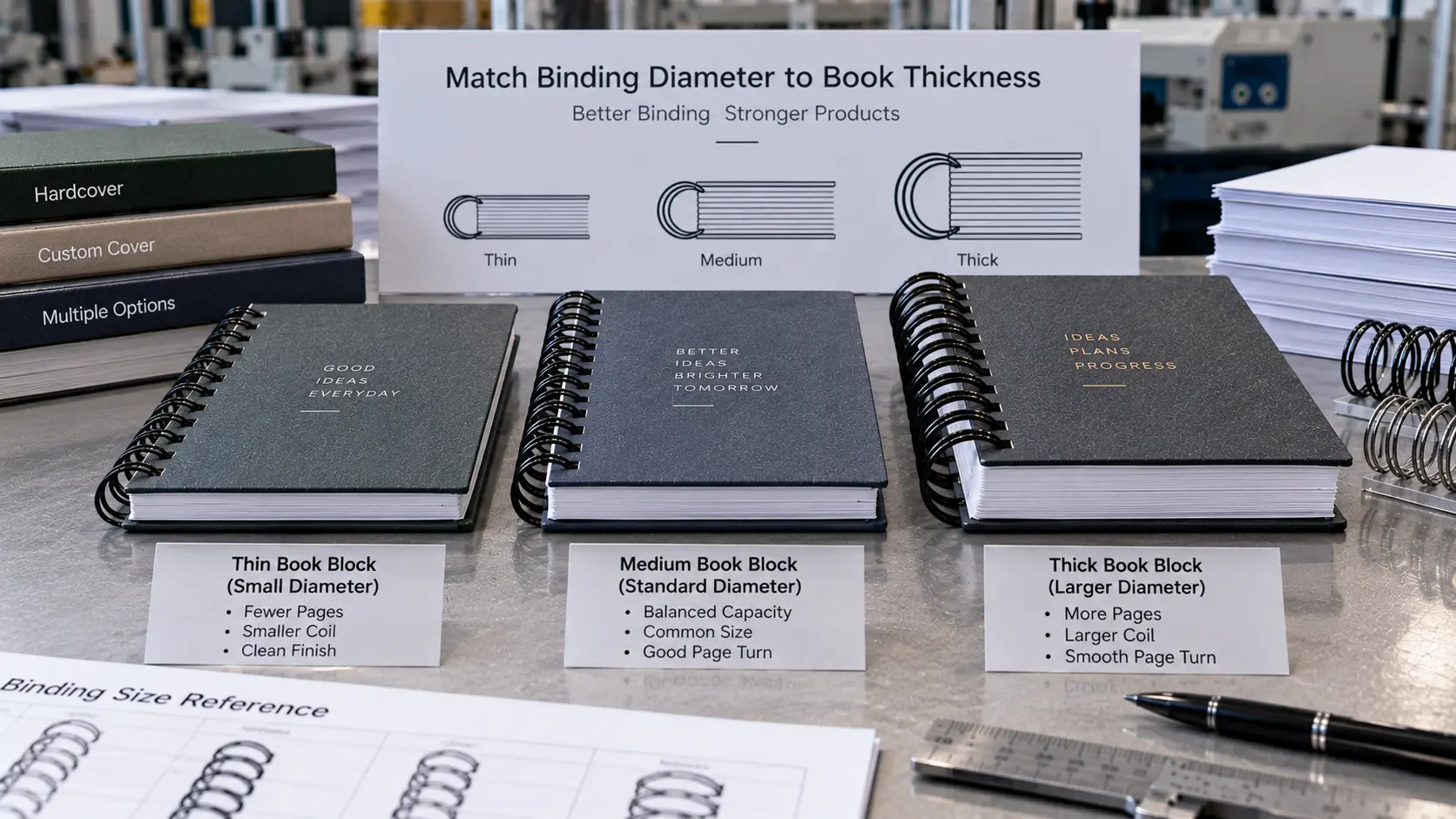
4. Match the Binding Diameter to the Complete Book Block
The spine must fit the book that exists after all components are assembled-not the page count that appeared in the first spreadsheet.
Measure or evaluate the compressed book block with:
- all interior sheets;
- front and back rigid covers;
- dividers and inserts;
- pockets or added components near the spine;
- any material that changes opening clearance.
A binding that is too tight can make the covers difficult to rotate and increase stress around the punched edge. A binding that is unnecessarily large can make the finished notebook feel visually loose and less controlled.
Use the YPS coil diameter and pitch guide for the underlying sizing logic, then verify the chosen diameter on a physical hardcover sample.
5. Choose Spiral Coil or Wire-O Based on Use
| Factor | Spiral Coil | Wire-O |
|---|---|---|
| Spine structure | Continuous helix | Double-loop wire |
| Page rotation | Designed for full rotation | Designed for flat opening and rotation |
| Visual character | Flexible, casual to premium depending on material/color | Structured, architectural, often selected for premium presentation |
| Color direction | Plastic/PET and metal options depending on project | Coated and plated finishes depending on specification |
| Key hardcover check | Cover clearance and coil insertion | Cover clearance and consistent wire closing |
The best option depends on the cover weight, intended handling, visual design and production method. YPS compares the two systems in Wire-O vs. plastic coil binding.
6. Treat Hole Position as Part of the Cover Design
Designers often finalize artwork before the punch pattern is overlaid. That can create avoidable problems: a logo or border sits too close to the spine, a decorative element is cut by the holes, or the cover's visual balance changes once the binding is installed.
The production artwork should therefore show the binding edge, hole area and safe visual zone. This is especially important for printed hardcovers because the front cover remains highly visible when the notebook is closed.
When the binding color is part of the product identity, review the cover artwork and binding sample together rather than approving them in separate meetings.
7. Check Cover Movement, Not Just Cover Appearance
A hardcover sample can look correct on a table and still feel wrong in use. Open the notebook fully, rotate the front cover, turn through the first and last pages, and watch what happens around the spine.
A good sample should show:
- free page movement without catching;
- no scraping between rigid cover and binding element;
- no tearing or whitening around punched holes;
- consistent hole alignment from front cover through back cover;
- stable cover position when the notebook is closed.
YPS's custom notebook cover auditing guide provides additional checks for surface handling, alignment and finishing beyond the spine itself.
8. Plan for Production Repeatability
For a retail notebook or repeat corporate program, keep a reference for the exact approved construction. Useful records include:
- cover board and surface specification;
- finished cover dimensions;
- hole pattern and binding-edge position;
- paper and page count;
- binding material, pitch, diameter and color reference;
- approved physical sample.
This reduces the risk that a later order uses the same artwork but a different cover build or page-block thickness that no longer fits the original binding.
Common Hardcover Spiral Binding Mistakes
- Approving an unpunched cover only: punching can expose cracking or lamination problems.
- Using page count as the only spine-size input: rigid covers and inserts also affect the finished block.
- Punching covers with an unsuitable stack: hard materials may need separate handling.
- Ignoring cover rotation: a visually correct sample can still bind too tightly.
- Designing artwork without the hole pattern: the binding edge is part of the graphic layout.
FAQ
Q: Can A Hardcover Notebook Be Spiral Bound?
A: Yes. A rigid cover can be mechanically bound with spiral coil when the cover construction is suitable for punching and the hole pattern, edge distance and coil diameter are designed for the complete book.
Q: Can Hardcover Notebooks Use Wire-O?
A: Yes. Wire-O is commonly used where a structured double-loop appearance and flat-opening behavior suit the product. The closer setting and wire diameter must match the finished book block.
Q: Can I Punch A Hardcover With A Normal Office Binding Machine?
A: Do not assume that you can. The answer depends on the actual cover material and the machine's approved capability. Rigid board or laminated covers may need dedicated punching equipment or a different production method.
Q: What Causes Cracks Around Hardcover Binding Holes?
A: Possible causes include an unsuitable cover construction, dull or inappropriate tooling, excessive stack load, poor lamination adhesion or incorrect hole position. Diagnose the material and punch result before increasing force.
Q: Where Can I Discuss A Custom Hardcover Spiral Notebook Project?
A: Review YPS's custom notebook capabilities and send the proposed cover, paper, page count and binding direction through the YPS inquiry form for specification review.


