Wire-O vs Plastic Coil Binding: The Call a Production Buyer Actually Has to Make
Leave a message
Two very different people land on a page like this. One is finishing a single proposal at the office and wants to know which spine looks sharper. The other is about to commit forty thousand wall calendars, or a container of OEM planners, to one binding spec before the fourth quarter closes, and can't afford to guess wrong on a full run. We manufacture both the twin-loop wire and the plastic coil that end up in those jobs, so this whole wire-o vs plastic coil binding call, framed the way a production floor actually makes it, is written for the second reader.
For that reader, "which binding is better" is the wrong question, and it quietly leads to bad orders. Wire-o and plastic coil both punch the binding edge, both thread an element through the holes, and both let a finished book lie flat and rotate a full 360 degrees. On the finishing table they behave like near-substitutes. The difference doesn't surface until later: in the mailer, on the retail shelf, in the returns bin. That is exactly where the money lands. So when you're choosing wire-o or plastic coil binding for a production run, the useful question is narrower: which one survives the way this book ships and gets handled, at a cost per delivered copy you can actually defend? That framing sits one level below the general wire-versus-spiral trade-off, because here the deciding variable is the material itself, metal against PVC, not the format.

The answer moves depending on three things most comparisons never pull apart: how the book travels, how the reader opens it, and how the cost gets counted. Take them one at a time.
Two elements, two opposite failure modes
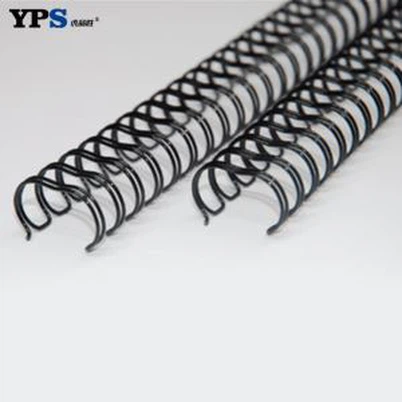
Strip away the marketing and the mechanical difference is small to look at and large in consequence. Twin-loop wire (Wire-O, double-loop, whatever your buyer calls it) is a row of paired metal loops sitting on parallel rectangular holes (Wikipedia). Plastic coil is a single continuous PVC filament wound like a long spring through round holes. Those two geometries decide almost everything downstream, and they fail in opposite directions.
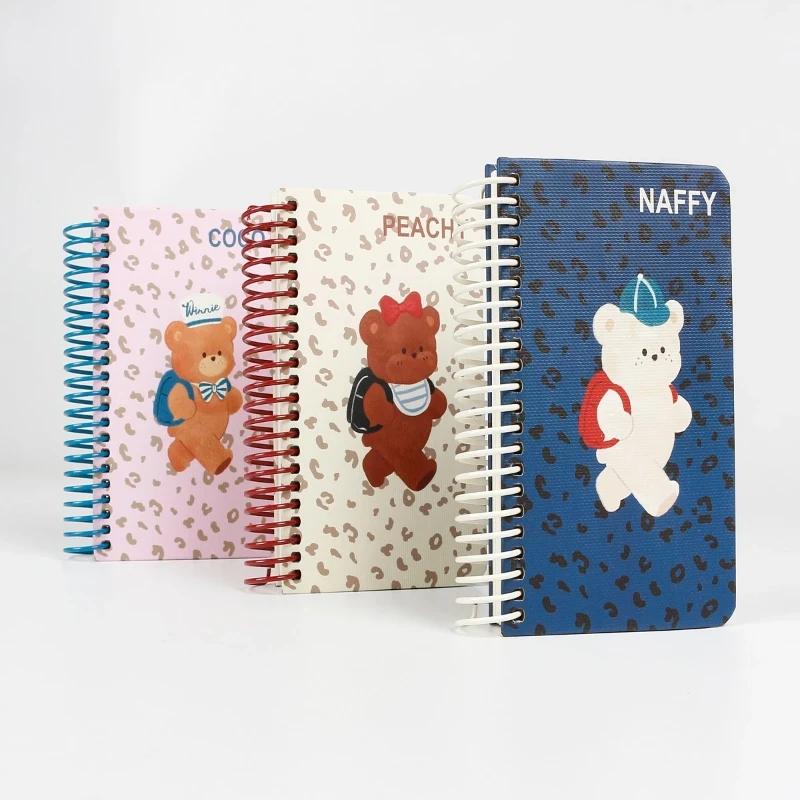
Metal holds its shape until it doesn't, then keeps the damage: a wire spine bent in transit stays bent. PVC does the reverse. It deforms under load and springs back, which is why a coil that's been sat on in a shipping carton often arrives looking untouched. Neither is "tougher" in the abstract. They're tough at different jobs, and matching the element to the job is the entire skill. Worth clearing up one naming trap before it costs someone an order: Spiral-O wire, the old 19-loop Ibico element that fits a comb punch, is not plastic coil and is largely discontinued. If a spec sheet or a buyer says "spiral," confirm whether they mean continuous plastic coil or that legacy wire, because the punch pattern and the whole supply chain differ. For the coil side specifically, our coil manufacturer's field guide covers the material in more depth.
What survives the box: crush, freight, and the "metal is stronger" instinct
Here's the stance most comparisons won't take plainly: for anything that ships unprotected or gets handled roughly, the instinct that metal wire-o is the more durable binding is usually wrong. It reads as durable on the desk. It does not behave that way in freight.

The reason is mechanical, not opinion. To form a twin loop, the wire has to be soft enough to close into a circle around the pages, which means it's soft enough to crush out of round when a carton gets stacked, dropped, or clamped. A crushed wire spine doesn't recover; the book reads as defective and comes back. A plastic coil under the same load flexes and returns to shape. So for a mailed promotional notebook or an unboxed retail product, the real question isn't which looks tougher but whether wire-o or coil is more durable for mailing, and coil's crush recovery is usually what protects your margin.
That advantage inverts the moment the book lives a protected life. On a shelf, in a slipcase, inside a reference binder that rarely leaves a desk, metal wire-o outlasts PVC comfortably. It won't take a set from being flexed thousands of times, and it holds a cleaner spine profile over years. The split is that clean: coil wins the trip, wire-o wins the shelf. Decide which one your book actually does before you decide anything else, because it overrides most of the reasons buyers think they're choosing on.
The half-hole drop: why coil quietly loses your crossovers
Flip a coil-bound book fully open and look at where the top of the front page sits relative to the top of the back page. They won't line up. Because a coil is one continuous helix, it advances on a slight diagonal as it threads through the holes, so when the book opens the back half drops roughly half a hole lower than the front. On a text-only workbook nobody notices. On anything with artwork or a table crossing the gutter, it's the difference between a clean spread and a job that looks misregistered.
Twin-loop wire doesn't do this. Each pair of loops pivots on the same flat plane, so both halves of an open spread stay level and crossover images meet at the gutter. This is the one place where wire-o vs coil page registration produces a hard rule rather than a preference: if your product has full-bleed spreads, maps, ledgers, sheet music, or any image that has to cross the spine and stay aligned, wire-o is the correct call and coil will cost you a reprint. The exception is the sub-format where this reverses on itself, and calendars are exactly it: hanger loop, crossover art, and packaging all pull in different directions at once. That one deserves its own conversation before a spec is locked.
Capacity, pitch, and the mistake that scraps an entire run
Start with the rule that has no workaround, because it's the one that turns a routine order into a total loss: wire-o pitch has to match the punch exactly. Wire comes in two standard pitches, 3:1 (three loops per inch, up to about 9/16") and 2:1 (two loops per inch, for the 5/8" to 1-1/4" range), and a run punched 3:1 will only thread 3:1 wire. We've watched a box of 2:1 wire meet a 3:1-punched job on the closing line: tens of thousands of covers, not one of them threadable, no salvage. Unlike a wrong color or a wrong diameter, a pitch mismatch can't be corrected after the punch. Coil's round-hole pattern is far more forgiving here, which is one quiet reason high-mix shops lean on it. It's also the kind of upstream detail a broker reselling a finishing service can't warn you about, because it lives on the manufacturing side of the bench.

Capacity is the other constraint, and it's simpler to reason about. Twin-loop wire is comfortable to roughly 200 pages, a little more at the largest diameters; plastic coil scales higher as its diameter grows, which is why thick manuals, heavy workbooks, and 500-plus-sheet directories default to coil. When the wire-o vs plastic coil binding call comes down to raw page count alone, the thick end of the range usually isn't a wire-o job at all.
Cost per book, counted the way it actually bills
On a line-item quote, plastic coil usually comes in cheaper per unit, commonly 10 to 20 percent below wire-o for a comparable spec. If unit price were the whole story, coil would win most jobs and this article wouldn't need to exist.
It isn't the whole story, and the number that decides it sits in a column no spec sheet prints: the copies you don't have to make twice. Fold in freight claims on crushed wire, reprints on misregistered spreads, returns on anything that arrived looking defective, and a slipped delivery date, and the "cheaper" spec can turn out to be the expensive one on a given run. The honest way to run a plastic coil vs wire-o cost per book comparison is total delivered cost per good book, not the unit line. That figure swings hard by product and destination: a wall-calendar program and a mailed promo notebook sit at opposite ends of it, which is why the same buyer can be right to order wire on one job and coil on the next.
So which one, sorted by the job on your floor
The decision resolves cleanly once you name the product and how it travels. This is the pick table we'd actually give a buyer, including the cases where you should choose the element we're not obviously selling:
| The job | Lean wire-o | Lean plastic coil |
|---|---|---|
| Corporate reports, portfolios, presentation books (protected life) | premium spine, holds shape on the shelf (run size and cover stock shift the economics) | |
| Full-bleed spreads, maps, sheet music (registration critical) | crossovers stay aligned | |
| Mailed notebooks, promo pieces, unboxed retail (rough transit) | crush recovery survives freight; confirm against your mailer and volume at quote | |
| Cookbooks, student workbooks, planners (heavy daily flexing) | won't take a set from constant use | |
| Thick books, 300+ sheets, directories (high page count) | scales with coil diameter | |
| Multi-page wall & desk calendars | default lean: flat hang, aligned month spreads | pulls back to coil if hanger-hole punch or drop-ship packaging dominates |
If your run lands in a row where we've pointed you to coil, that's the recommendation. Matching the element to the job protects your reorder more than upselling the metal ever would.
Before you lock the spec
Most binding regret traces back to a decision made on appearance and unit price, then discovered in the returns bin. It's avoidable. Name how the book ships, name whether spreads have to register, count the cost as delivered-good copies, and the element usually chooses itself.

When the job calls for a squared, premium spine that holds registration through a protected life, that's where our twin-loop wire cut to your bind length fits. When it has to shrug off the mailer and flex through daily use without taking a set, our PVC spiral coil for high-handling print is the safer spec. It's the same wire and coil the repeat calendar and planner programs run on season after season, so the first order needn't be a leap of faith: request a free sample and a pitch check against your exact punch and page count before the run commits.
FAQ
Q: Is wire-o binding stronger than plastic coil binding?
A: It depends on the trip: on a protected shelf metal wire-o outlasts coil, but for unprotected mailing or rough handling PVC coil resists crushing and springs back where wire-o bends for good.
Q: Why do pages misalign on plastic coil but not on wire-o?
A: A coil is one continuous helix, so an open book's back half drops about half a hole and sits offset, while wire-o's paired loops pivot on a single flat plane and keep crossover artwork aligned.
Q: What page count can wire-o and plastic coil each handle?
A: Wire-o is typically comfortable up to around 200 pages, while plastic coil scales to much higher counts as coil diameter grows, making it the usual pick for thick workbooks and directories.
Q: Which costs less, wire-o or plastic coil binding?
A: Plastic coil usually runs about 10–20% lower per unit, but the deciding figure is total cost per good delivered book, including the copies you don't reprint after freight damage or returns.
Q: Does pitch matter when choosing wire-o?
A: Yes, wire-o pitch (3:1 or 2:1) has to match the punch pattern exactly, and a mismatch scraps the whole run with no fix, so confirm pitch against your punch before you place the order.