

Useful when the product has to justify a premium shelf price through material feel, recognizable artwork, page design and binding details rather than logo placement alone.
YPS Premium Notebook Collection
A premium custom notebook manufacturer for stationery brands, boutique retailers and gift programs that would rather pay for better paper, considered materials and a better finished object than chase the lowest possible unit price.
Choose fountain-pen-friendly paper, scratch-resistant cover constructions, fully printed interiors and binding colors that belong to the design. Small premium runs can be finished by hand and checked one at a time, which makes this range better suited to products people are expected to keep.

Since 2017
Binding coil manufacturing roots in Dongguan
20+ countries
Existing export experience in binding products
50+ coil colors
With additional color matching available
ISO 9001
Quality system stated on the current company site
Premium Custom Notebook Programs for Boutique Retail and Gifting
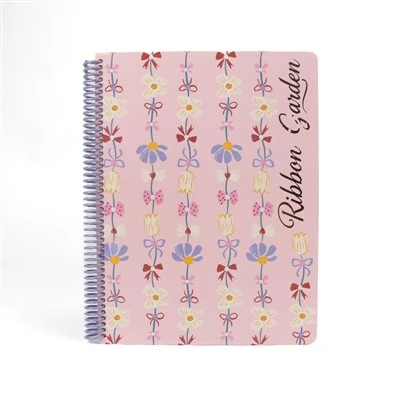
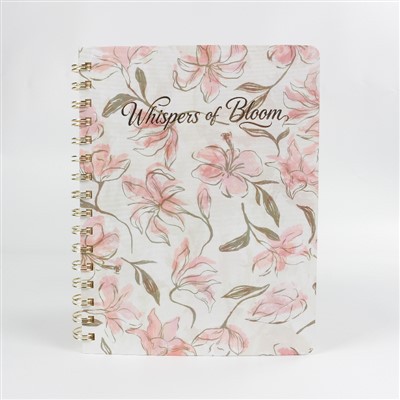
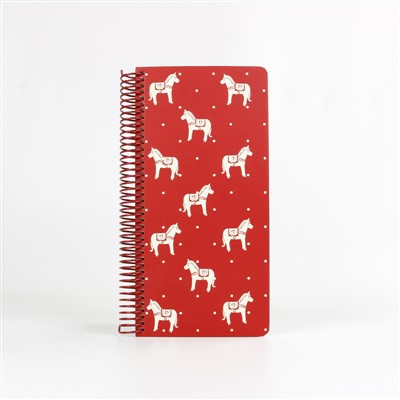
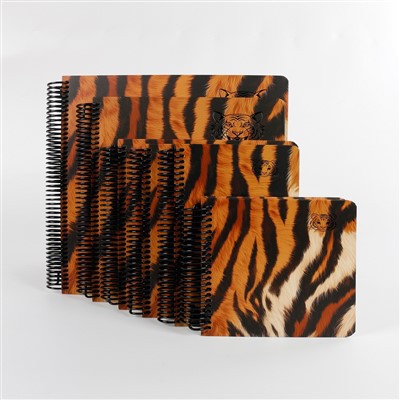
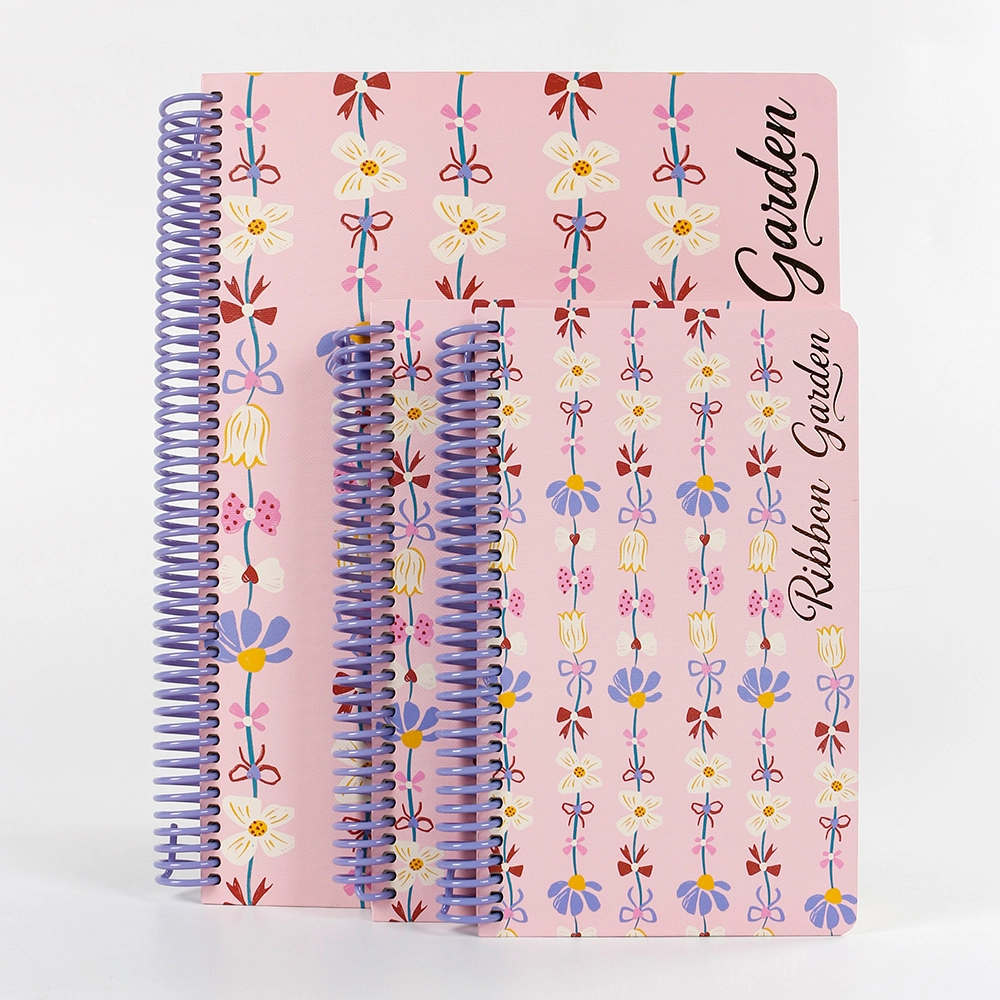
The collection covers hardcover journals, floral and animal pattern series, portable formats and spiral-bound gift designs using PET coil, metal spiral and twin-loop wire. Current products include A4, B5, A5, A6 and A7 formats, along with project-specific sizes, different page layouts and selected bleed-resistant paper specifications. Buyers can develop an OEM stationery range, private-label gift collection or smaller design-led launch without treating every detail as a commodity. The practical difference is visible in the paper surface, cover behavior, interior print, punching and spine, all of which affect whether the finished book still feels considered after weeks of use.
For stationery brands
For gift and hospitality buyers
Suitable when the journal represents a hotel, members' club, client program or gifting concept and the object should feel worth keeping after the event.
Not designed around the cheapest possible brief
Automated mass production is the better route when the requirement is a very large quantity of the same basic book at minimum unit cost. This range intentionally serves a different buying decision.
Custom Notebook Styles for Private Label and Wholesale Buying
These are current styles found in the live collection. Specifications below use the data published on their corresponding product pages; where the site does not provide a numeric specification, the card does not invent one.




Fountain Pen Friendly Notebook Paper for a Better Writing Experience
Good writing paper is not defined by gsm alone. For a premium retail product, the more useful question is what happens when a real pen meets the finished sheet.
Ink should stay where the writer puts it
The current company specification says paper is chosen so fountain-pen ink sits on the surface rather than passing through the sheet. The Tiger Stripe series goes further and explicitly specifies its smooth inner paper for fountain-pen use without ink bleeding through.
A smoother sheet changes the daily experience
Surface feel matters because a premium journal is used hundreds of times after its packaging is gone. The paper is selected to reduce nib drag, while clean cutting is intended to prevent loose fibres from collecting around the page edge and binding channel.
Approve the paper with the pen your customer is likely to use
A sourcing manager should test both sides of the physical sample with the intended writing tools. Bleed-through, feathering, ghosting, surface drag and paper dust are easier to judge from a real book than from a gsm number in a quotation.

What this means for a stationery buyer
The paper decision should be made before the final coil diameter and before the sample is approved because a heavier or different stock changes the thickness of the finished book.
- Test the actual production paper.
- Check both sides of the sheet.
- Inspect paper dust around punched holes.
- Reconfirm binding geometry when paper thickness changes.
Scratch Resistant Notebook Covers Designed for Real Handling
A cover can look excellent under studio lighting and still be the wrong choice for export cartons, retail shelves and daily bags. Material selection therefore has to consider how the surface behaves after handling, not only how it looks in the artwork file.
Several cover directions are already within the development language
Current company information names fabric, textured stock, coated paper and PU as cover directions. Individual collection pages also show matte and glossy laminated hardcovers, including products where the surface is specifically described as scratch-resistant.
Full interior printing can carry the identity beyond the cover
The current company page describes full-color printing throughout the interior and specifies low-odour, low-migration ink for the premium program. This lets a brand use headers, layouts, illustrations and page architecture as part of the product rather than treating the inside as generic stock.
Premium does not have to mean visually busy
A restrained cover can still feel expensive when the board holds its shape, the surface stays clean, the corners are deliberate and the page block aligns properly. That gives a private-label stationery buyer more ways to create a recognizable product than simply adding more decoration.
Sample approval should include a handling check
Rub the surface, handle the corners and look at the book after it has been carried rather than judging an untouched proof. If a finish marks too easily for the intended distribution route, changing it before bulk production protects more value than explaining the damage later.
Custom Spiral Notebook Binding Designed Around the Finished Book
YPS began on the component side of the industry, so binding is treated as an engineering decision as well as a visual one. The coil diameter, pitch, hole pattern, cover thickness and finished page block have to work together if pages are expected to turn cleanly.
More than 50 stock colors create useful design room
Published coil capability includes more than 50 stock colors plus further color matching. Plastic, PET and coated metal do not display the same color in exactly the same way, so a physical swatch or sample is more useful than approving the spine from a screen.
The published coil range runs from 6 mm to 50 mm
Current company specifications list 6 to 50 mm diameters with 4:1 as the standard pitch and 3:1 available. Those numbers are not an invitation to choose from a table without testing; the final diameter should follow the measured finished book.
Gold and rose gold are already part of the available finish language
Current products use black PET, electroplated gold twin-loop wire and gold or rose-gold metal spiral options. That gives premium spiral-bound journals a way to coordinate the spine with the cover rather than defaulting every collection to one standard binding color.
A change in paper can require a change in the spine
The useful advantage of producing coil and finished books within the same operation is that a binding problem exposed during sampling can be reviewed together with punching, paper thickness and assembly instead of being pushed between unrelated suppliers.
| Published capability | Current specification | Why a buyer should care |
|---|---|---|
| Coil diameter | 6 mm to 50 mm | Allows the spine to be selected around different finished book thicknesses. |
| Pitch | 4:1 standard with 3:1 available | The pitch must work with the punch pattern and finished construction. |
| Materials | Nylon-coated steel, PET and PVC are listed in current company specifications | Different materials change weight, appearance, resilience and the way color is rendered. |
| Color | 50+ stock colors plus Pantone matching | The spine can become part of a collection identity rather than a generic component. |
| Twin-loop finish | Color, nylon coated, electroplated gold and rose gold | Useful when the design calls for a more decorative metallic spine. |
OEM Notebook Development for Brands Testing a Premium Range
A sourcing manager usually needs three answers before approving an unfamiliar supplier: what quantity is realistic, what the physical sample will prove and which decisions are still open. The most useful development process answers those questions before asking for final artwork.
Define the commercial brief
Start with size, page count, cover direction, intended quantity and end use. These inputs reveal whether the project is a boutique retail launch, corporate gift, hospitality item or higher-volume branded program.
Turn the concept into a buildable specification
Cover material, interior layout, paper, punching, coil type, coil color, rounded corners and finishing can then be reviewed together. Design support currently covers covers, layouts, coil placement, rounded corners and finishing.
Approve a physical construction
Finished-book samples are made with the intended paper and actual coil rather than only a visual mock-up, giving product teams something they can write in, open, rub, carry and inspect before production is released.
What if your target quantity is below the workable floor?
Current company guidance says the team identifies which specification change is most likely to reduce the minimum, with the cover often becoming the deciding variable because some materials are stocked while others have to be purchased by the roll.
Who owns a new custom tool?
Existing A4, B5, A5, A6 and A7 punch tooling is already available, but the public finished-book information does not define ownership terms for any new non-standard tooling. For a custom format, ownership, storage and reuse should therefore be written into the quotation or purchase order before the tool is commissioned.
How long does sampling take?
The customization page publishes a 3 to 7 working day sample baseline. The company page is more specific about finished books and states that they are quoted per project, so a complex cover, full printed interior or unusual construction should not be forced into a generic sample promise.
What should the sample approval cover?
Approve the cover finish, actual paper, interior print, trim, punching, coil geometry, page turning and packaging as one finished object. That is more useful than approving isolated components and discovering their interaction during bulk production.
Private Label Notebook Production That Protects Your Brand Experience
A private-label project should be more than an existing factory book with a logo added to the front. The cover, page architecture, writing feel, binding color and packaging can be treated as one design system so the finished range belongs to the buyer.
Use the interior as part of the identity
Current development options include lined, dotted, grid, blank and planner layouts, while company information supports full-color printing throughout the interior. Headers, illustrations, planning systems and recurring page details can therefore carry the brand beyond the cover.
Use the spine as a visual decision
The coil can be coordinated with the cover using stock colors or project-specific matching. This is particularly useful for a boutique stationery collection where buyers see several sizes together and expect a consistent visual language.
Keep supplier branding out of the customer-facing presentation
Current company information states that OEM, ODM and private label are all supported and that packing can use plain or fully branded cartons with no YPS branding visible when agreed. That gives importers, retail brands and design studios a cleaner own-brand presentation.
Slow production should buy something the customer can notice
Hand finishing is not automatically better than automation. It makes commercial sense when the buyer is paying for tactile consistency, unusual material combinations, boutique quantities or a spine that is intentionally part of the product. If those details do not matter to the customer, the slower route is difficult to justify.

1.Printing

2.Paper cutting

3.Folded page

4.Basting

5.Perfect binding

6.Paper cutting

7.Case making

8.Mounting

9.Drilling
Notebook Quality Documents for International Procurement
Compliance claims are most useful when they describe the document that exists and the material it applies to. The current company site distinguishes its quality system, binding-material reports and end-use statements rather than claiming that every finished product carries every certification.
ISO 9001
YPS states that it operates under an ISO 9001 quality system. For buyers, this supports evaluation of the management framework behind production and inspection rather than serving as a claim about one individual product.
SGS
Binding materials are stated to carry SGS test reports. A procurement team can request the relevant report for the binding component selected for the order.
REACH
REACH statements can be issued according to current company information. Buyers should match the requested document to the actual materials and destination market.
EN 71 3
EN 71-3 statements can also be issued. This may matter when product positioning or end use creates a specific migration-document requirement.
CPSIA
CPSIA statements are available where the end use calls for one. The requirement should be established from the finished product and target market rather than added automatically.
FSC Mix
FSC Mix paper can be specified when the buyer nominates that stock, allowing paper sourcing requirements to be written into the project before sampling.
Published quality checks also include paper flatness, coil-cut smoothness and binding strength. These are practical release criteria because each one affects the experience of the finished book rather than simply adding another badge to the page.
Custom Notebook FAQ for Sourcing Managers and Product Teams
What is the MOQ for a custom project?
There is no single minimum that applies to every finished book. Format, punch tooling, cover material, paper stock and the number of separate cover designs can all move the workable quantity, while A4, B5, A5, A6 and A7 already have existing punch tooling.
Can the paper be specified for fountain pen writing?
Yes. Selected paper can be specified and physically writing-tested for fountain-pen use. The approved sample should be checked for bleed-through, feathering, ghosting and surface drag because grammage alone does not determine writing performance.
Can the binding color be matched to our cover artwork?
Yes. Current coil capability includes more than 50 stock colors plus additional matching, and collection products already use PET, plastic and metallic finishes. A physical swatch is preferable because paper, plastic and coated metal can render the same color reference differently.
What should we approve before bulk production starts?
Approve one physical construction covering the cover surface, paper, interior printing, trim, punching, coil geometry, page movement and packaging. Finished-book samples are made using the intended paper and actual coil rather than only a visual mock-up.
How long does a custom sample take?
A 3 to 7 working day sample baseline is published on the customization page, while finished-book samples are quoted by project. A simple build and a design requiring unusual materials, full printed interiors or special finishing should therefore not be assumed to share the same schedule.
Can we sell the finished product entirely under our own brand?
Yes. OEM, ODM and private-label work is supported, and packing can use fully branded cartons without supplier-facing branding when specified. Cover artwork, page layouts and binding color can also be developed around the buyer's visual identity.
We're well-known as one of the leading notebook manufacturers and suppliers in China for our quality products and customized service. Please feel free to buy cheap notebook made in China here from our factory. Contact us for free sample.