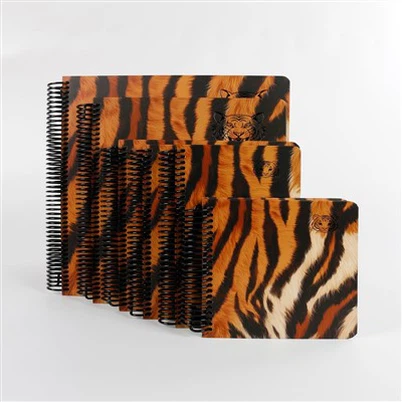
Scratch-Resistant Covers Meet Perfect Coils: Inside YPS Customized Notebooks
Leave a message
A Premium Notebook Should Survive Life Outside the Gift Box
A premium notebook is easy to make look good for a sample photo. The harder test comes after it has spent several weeks in a work bag, been opened hundreds of times, and travelled through packing, freight and daily handling. Buyers evaluating premium customized notebooks should therefore judge more than the artwork: the cover has to resist visible wear, the pages need to turn without fighting the binding, and the finished construction has to remain consistent after the sample becomes a production run.
YPS is deliberately not positioning these notebooks as the cheapest route to a generic promotional giveaway. A buyer sourcing 50,000 standard books primarily on unit price has a different project from a stationery brand, boutique retailer or corporate gift buyer trying to make an object people will keep. Customized notebooks for premium stationery brands justify additional sampling only when material feel, cover durability, binding color and repeated use actually influence the value of the finished product.
The extra time is concentrated where a wrong decision becomes expensive later. We want the chosen cover in hand before approving it, the notebook sample made with the intended paper and coil rather than a cosmetic mock-up, and the coil sized against the finished book instead of a theoretical page count. That is the production logic behind high-end customized notebooks at YPS: slow down at the decisions that are difficult to reverse after bulk production starts.

Scratch Resistance Starts With How the Notebook Will Be Used
A scratch-resistant cover is not a single material specification. It is a performance requirement.
This matters because scratch-resistant customized notebooks can face very different environments. An executive journal may spend most of its life on a desk. A planner may travel daily beside keys, chargers and a laptop. A retail notebook can be repeatedly picked up before it is ever purchased.
| Use scenario | What matters most | Cover direction | Risk to check during sampling |
|---|---|---|---|
| Executive or luxury gift | Tactility and appearance | Premium textured, coated or selected soft-touch finishes | Fingerprints, edge wear, visual marking |
| Daily carry | Abrasion and handling resistance | Scratch-resistant matte or durable textured surface | Bag friction, keys, repeated rubbing |
| Retail stationery | Appearance after repeated handling | Durable coated or textured cover | Surface burnishing, corner wear, scuffs |
The common assumption that "soft-touch means premium, therefore soft-touch is better" is one we disagree with. Soft-touch can create an excellent tactile experience, but tactile quality and abrasion resistance are not the same property. A softer finish may be exactly right when luxury customized notebooks used as corporate gifts spend most of their life on a desk or in presentation packaging. A dark notebook carried every day will often benefit more from a harder scratch-resistant surface.
Abrasion can also be evaluated more systematically than rubbing a sample once with a thumb. ASTM D5264 describes a method for comparing the abrasion resistance of printed materials and can help buyers and suppliers establish an agreed basis for judging scuff resistance. (ASTM International)
The useful procurement rule is simple: approve the finished cover construction, not merely the name of the laminate or substrate. The same matte film can behave differently once print coverage, board, coating and surface color change. Buyers specifying customized notebooks for corporate gifts should therefore decide first whether the book will live on a desk, on a retail shelf or in a bag; the correct finish can change with that answer.
For buyers comparing scratch resistant custom notebook covers, our separate release-check article goes deeper into the material-by-material inspection logic. Here the important point is narrower: cover approval has to survive the same handling the final product is expected to see.

How YPS Releases a Cover Before Bulk Production
A cover claim becomes useful only when it produces a record that can be compared with the bulk run. The release record for bulk customized notebooks should identify the exact cover construction and finish batch, the abrasion or rub method used, the exposure or rub count, the applied condition, and the acceptable visual change after testing. Without those fields, "scratch-resistant" remains subjective.
We are not publishing a universal YPS rub-cycle number here because no verified project-specific cycle/load record was supplied for this article. That is a deliberate data boundary, not a substitute for testing: a soft-touch laminate, unlaminated coated board, textile wrap and PU cover should not inherit the same pass number. When a project uses a defined abrasion requirement, its number belongs on the approved sample record and must follow that construction into production.
ASTM D5264 is useful here because it can compare printed inks, coatings, laminates and substrates under a defined laboratory practice. ASTM D4060 serves a different purpose: its stated scope concerns organic coatings on plane, rigid surfaces, so we do not automatically treat a D4060 value as a universal pass/fail specification for laminated paper, cloth or flexible PU notebook covers. (ASTM International)
There is also factory experience behind this caution. Before YPS began making finished notebooks, completed books sometimes returned to our workshop for specification checks. The recurring problems were small but revealing: a cover that had scuffed pale during handling, paper dust trapped along the binding channel, or punched holes that never quite suited the coil. That history matters when a buyer evaluates a customized notebooks manufacturer: our pre-production review puts the cover, punching and binding decisions together instead of treating them as unrelated operations.
Keep the interior evidence short and physical
Paper still matters, but it is not the subject of this article. For fountain-pen-friendly customized notebooks, YPS can qualify the selected sheet by writing on the actual production paper and checking the reverse for bleed-through rather than assuming GSM alone will predict performance. Interior printing, edge cleanliness and paper dust are inspected on the physical notebook sample; the fuller paper-and-print discussion belongs in our manufacturing content rather than being repeated here.
Environmental claims follow the same evidence rule. When an FSC claim is part of the brief, YPS can supply FSC Mix paper if the stock is nominated; the claim still has to follow the applicable Chain of Custody documentation requirements rather than relying on a generic "eco-friendly" description. (Forest Stewardship Council)
A Perfect Coil Is Geometry Before It Is Decoration
The coil is visually small, but mechanically it governs every page turn.
A 4:1 pitch has four holes per inch and a 5:1 pitch has five, but choosing between systems is not an aesthetic preference. In coil-bound customized notebooks, the pitch, coil diameter, hole geometry, cover thickness and finished book block have to operate together. Selecting one of them without the others is how an apparently correct specification becomes a notebook that feels tight when pages turn.
Thicker books may require a wider pitch and larger holes to make insertion and page movement practical; post-press guidance for thick books discusses 3:1 and 2.5:1 configurations with larger oval holes for this reason. (PostPress Magazine)
YPS's current coil capability provides a useful scale reference: diameters run from 6 mm to 50 mm, with 4:1 as a standard pitch and 3:1 available, while more than 50 stock colors are maintained before project-specific color matching is considered. Those are not reasons to choose a larger or more colorful coil; they give YPS customized notebooks room to select the spine around the finished construction rather than force the notebook into one stock component.
The strongest rule remains the simplest: coil diameter should be selected from the measured finished book, not page count alone. A 100-sheet hardcover, a 100-sheet softcover and a 100-sheet notebook with pockets or dividers can present different binding thicknesses. Buyers sourcing OEM customized notebooks should therefore expect the sample to establish the final binding geometry before bulk production is released.
For the dimensional side of that decision, the spiral binding coil sizing guide goes further into diameter, pitch and book-block thickness.

Where the Cover and Coil Have to Be Engineered Together
A premium cover and a correctly made coil can still produce a poor notebook if the interface between them is wrong. This is where B2B customized notebooks need to be evaluated as an assembled object: cover thickness changes the distance the coil has to clear, hole position controls the remaining material at the binding edge, and coil diameter determines whether the cover and inner sheets rotate freely.
Here is the variable that gets missed when purchasing treats punching and binding as separate line items: adding a thicker hardcover after coil selection changes the geometry even though neither the paper count nor the artwork changed. If clearance becomes too small, the cover can drag against the first pages. If the coil is oversized to compensate, the notebook may turn freely but the spine feels loose and visually out of proportion. A private-label customized notebooks project therefore needs its punch position and coil choice confirmed on the finished dummy, not on two separate supplier specification sheets.
Color introduces a different interface. A Pantone reference viewed on printed paper, PET/PVC filament and coated metal does not appear identical simply because the reference number is the same. The practical approval for color-matched customized notebooks is physical: put the production cover beside the actual coil and judge the combination under consistent light. YPS forms and colors binding coil in-house, which allows this decision to happen before the coil becomes an outsourced constraint.
Four Problems Buyers Rarely See in a Sales Sample
The most deceptive failure in customized notebooks for daily carry is a cover that looks perfect at approval but burnishes or scuffs once it meets bag friction. The release question is therefore not "Does this sample look premium?" but "What type of contact is this finish expected to survive?"
A second failure appears when printed coverage and surface finishing are approved independently. Lamination or coating performance depends on the printed construction underneath it, so printed customized notebooks should be tested after the intended print and finish have been combined, not by approving a blank material swatch.
The third is binding geometry. A spiral can have the correct material and color while still feeling wrong because the pitch, punch and diameter were never checked against the completed book. That is why spiral customized notebooks must be turned page by page as a finished sample rather than released from a coil specification alone.
The fourth is almost invisible until the user touches it. Rough punched edges, loose fibers or paper dust in the binding channel can undermine the expensive cover around them. Manual inspection still earns its place on hand-finished customized notebooks at this stage: not because handwork is automatically superior, but because surface feel and small debris are easy to miss when the only quality check is dimensional.
The Pre-Production Sample Is the Release Standard
A physical pre-production sample should function as the reference specimen for customized notebooks bulk production. Its job is not simply to prove that the artwork has been received correctly; it establishes what the cover, page movement, binding fit and finished presentation are supposed to look and feel like when production units are inspected.
| Check | What the buyer should approve | Why it matters |
|---|---|---|
| Cover | Material, print, color and surface behavior | Protects appearance |
| Paper | Smoothness and fountain-pen writing result | Protects writing experience |
| Interior print | Color, registration and writable surface | Protects design intent |
| Trim | Clean edges and absence of loose paper dust | Protects tactile quality |
| Punching | Hole position and clean edges | Protects page integrity |
| Coil | Material, color, pitch and diameter | Protects page turning |
| Finished book | Lay-flat behavior and repeated page movement | Tests components together |
| Packaging | Contact surfaces and movement in the pack | Protects the finished surface in transit |
The table is intentionally a buyer-facing release check rather than a claim that every construction shares identical tolerances. The production specification behind it is where the project-specific numbers belong: coil size, pitch, approved materials, cover construction and any agreed abrasion condition. That distinction matters when customized notebooks bulk orders move from one signed-off sample to hundreds or thousands of units.
YPS notebook samples are produced using the intended paper and actual coil rather than a purely visual mock-up. That adds work before production, but it gives the buyer something more useful than a rendering: a book that can be written in, opened flat, rubbed, carried and inspected before the expensive part of the order begins.
Why Our Coil Background Changes the Notebook
YPS started in 2017 as a binding coil factory. Today, coil, Wire-O and small-run notebooks are produced under one roof, the company works under an ISO 9001 quality system, and products ship to more than 20 countries. Those facts matter when a buyer evaluates a customized notebooks manufacturer because the notebook line did not begin with cover printing; it grew out of the component that controls how the book opens and turns.
Our published coil specifications span 6–50 mm diameters, 4:1 standard pitch with 3:1 available, and more than 50 stock colors plus further color matching. The important advantage is not the size of that catalogue. It is what happens when a notebook sample exposes a binding problem: the coil specification, color and forming decision can be reviewed alongside punching and book assembly instead of being passed to an unrelated component supplier.
That also defines the limit of our positioning. We are not claiming that manual work makes every notebook better than an automated one. Automation is the correct choice when the target is very high volume, standardized construction and minimum unit cost. Handcrafted premium customized notebooks justify more manual finishing and one-by-one checking when buyers are paying for tactile consistency, unusual material combinations, boutique quantities or a spine designed as part of the product.
That is the distinction behind YPS's move from binding supplies into international premium stationery: controlled manufacturing where repeatability matters, human judgment where the product has to be felt, and a production sample that defines the boundary between the two.
FAQ
Are YPS customized notebooks intended for low-cost promotional orders?
YPS customized notebooks are primarily positioned for buyers who prioritize materials, tactile quality, binding detail and product character over the lowest possible unit price.
Can customized notebooks use paper that does not bleed with fountain pens?
Yes, selected paper can be specified and writing-tested to prevent bleed-through under the agreed fountain-pen test conditions.
Is soft-touch the best scratch-resistant notebook cover?
No, soft-touch optimizes tactile feel, while the best scratch-resistant finish depends on how and where the notebook will be handled.
Can the binding coil color match the notebook cover?
Yes, YPS can coordinate coil and cover colors using physical samples because identical color references can appear different across paper, plastic and coated metal.
How should a buyer approve premium customized notebooks before bulk production?
Approve a physical sample covering the cover finish, paper, interior printing, trim, punching, coil geometry, page turning and packaging before releasing bulk production.
Build the Specification Before You Ask for the Lowest Price
A buyer developing OEM customized notebooks for a stationery brand, boutique retailer or premium corporate gift program will get a more useful quotation by sending five things first: size, page count, cover concept, intended quantity and how the notebook will be used. Those inputs let us determine which material and binding questions need to be settled before sampling.
If you are still comparing constructions, review YPS options for customized notebooks for corporate gifts to see the cover and binding directions already available. When the brief is ready, send the same five inputs to YPS; we can review the cover, paper and coil specification before preparing a production-relevant sample.
The point is not to make the specification complicated. It is to resolve the expensive uncertainties while they are still sitting on the sample bench instead of inside a finished bulk order.