From Coil Manufacturer to Notebook Creator: YPS Expertise in Custom Notebooks Bulk Production
Leave a message

Bulk Should Feel Like a Product, Not a Giveaway
For buyers sourcing custom notebooks bulk, the real quality question is not how many customization options appear on a quotation. It is whether the notebook still feels like a considered retail product after those choices are repeated across a production run. The safest way to judge that is to approve the finished notebook as a system, rather than approving a paper swatch, decorated cover and binding separately.
In PPAI's 2026 consumer research, 68% of respondents said usefulness makes branded merchandise feel valuable and 65% cited high quality. The study covers branded merchandise generally, so we use it as a directional purchasing signal rather than a notebook-performance claim. (PPAI)
A premium custom notebooks bulk project therefore has a different brief from a promotional giveaway. A logo can be correct while the notebook is still wrong: the paper can smear with the intended pen, a heavy stock can overcrowd the binding, a soft-touch cover can mark during normal carrying, or the wire can look unrelated to the cover once both are seen under the same light.
For YPS, premium is an operational standard rather than a price adjective. Paper, print, cover and binding should continue to behave as one product after the buyer moves from a sample to thousands of units. That is the standard behind custom notebooks bulk with logo when the notebook is meant to stand as a product rather than as a disposable promotion.
We Learned Notebooks From the Binding Out
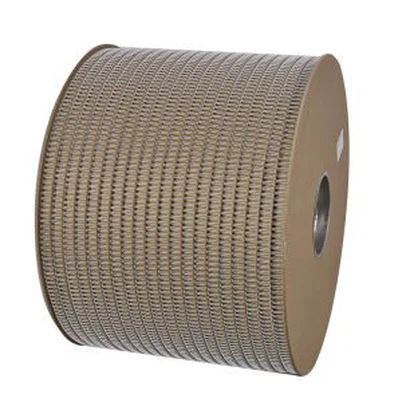
YPS did not start by printing notebook covers. We started with spiral coil, double-loop wire and the machines used to form and process those binding systems. Our capability covers multiple pitch systems, a 6–50 mm coil-diameter range and color-controlled metal and plastic options.
That background changes how we evaluate a notebook project. A cover-first supplier tends to see artwork, material, foil, color and packaging first. A binding manufacturer also sees finished text-block thickness, hole geometry, pitch, coil clearance, cover stiffness and how the user's hand reaches the page near the spine.
In custom spiral notebooks bulk, the cover and binding have to be designed as parts of the same object. A larger coil can improve clearance but leave too much movement; a smaller coil can restrict page turning. A rigid cover changes leverage around the binding, while dividers, pockets and inserts change the finished stack even when nominal page count stays the same.
That is why our move from component manufacturing into notebooks matters to a buyer. Coil experience is not useful as heritage unless it helps catch specification interactions before they become production problems.

One "Upgrade" Can Invalidate Another Approved Specification
Changing one premium-looking specification can make another previously approved specification wrong. That is one of the most important lessons in premium custom notebooks bulk production.
We have a published YPS production case that illustrates it. A 160-sheet A5 hardcover notebook changed from 80 GSM to 120 GSM paper, but the construction remained paired with a 20 mm coil. The new sheet sounded like an obvious material upgrade, yet the thicker finished text block no longer matched the existing binding. Returns began after roughly seven weeks of use, and the corrected construction moved to a 32 mm coil.
The conclusion is not that 120 GSM paper requires a 32 mm coil. Paper caliper, sheet count, inserts, covers and binding clearance have to be recalculated together whenever the construction changes. The numbers belong to that specific project; the principle is what transfers to another order.
For buyers, this creates a practical supplier test: ask what gets recalculated when one approved material changes. If the answer is only price and lead time, the specification review is probably incomplete. Our premium custom notebooks bulk production article explains how material, construction and final assembly interact.
Paper Approval Starts With Ink, Not GSM
For premium custom notebooks bulk, higher GSM does not automatically mean a better writing experience. GSM measures mass per square meter; it does not tell the buyer how fountain-pen ink will spread, whether gel ink will smear, how visible writing will be from the reverse side or what the paper will feel like under different nibs.
Paper testing organizations separate these properties for a reason. TAPPI maintains distinct methods for grammage, smoothness, ink resistance, roughness and other physical properties instead of treating paper weight as a complete performance score. (TAPPI)

For practical approval, we separate three effects. Feathering is sideways spreading that makes an ink line fuzzy. Bleed-through means ink penetrates the sheet. Ghosting means writing remains visible from the reverse side without penetrating it. A buyer who wants both sides usable should not treat those outcomes as interchangeable.
For premium custom notebooks bulk intended for fountain-pen users, we prefer to write on the proposed production stock with representative pens, inspect the reverse side and record what is acceptable before production. A smooth sheet can still dry slowly; a more absorbent sheet may control drying but widen a wet ink line. "Smoothest" is no more useful as a universal specification than "heaviest."
Our writing tests are production-approval tools. They do not replace a laboratory method when a customer's contract or compliance program requires a formal standard. The purpose is to stop an untested phrase such as "fountain-pen friendly" from becoming the only acceptance criterion.
Page-edge cleanliness belongs in the same review. A good paper stock loses much of its effect if trimming or punching leaves loose fibers and paper debris inside the finished book.
Cover Durability Depends on Where the Notebook Will Live
Scratch resistance is not a cover-material property alone. Decoration and handling environment can change the result. That is why a clean material swatch is not enough to approve a cover for premium custom notebooks bulk.
Consider three briefs. An executive notebook presented in a rigid box and used mainly on a desk can reasonably prioritize tactile richness. A daily planner carried beside keys, cables and a laptop needs stronger resistance to repeated contact. A retail notebook may be handled by many people before its final owner purchases it.
Finishing changes the material too. Foil introduces heat and pressure. Debossing compresses the surface. Printing, lamination and coatings change surface friction and wear behavior. A cover that looks clean before decoration can respond differently after the final process.
For custom notebooks bulk, our preference is to review the decorated cover in the actual notebook construction. Carry it, handle the edges and compare the logo area and corners after use. If scratch resistance is part of the brief, define the expected use instead of asking only whether the supplier offers a "scratch-resistant material."
We also avoid the phrase "scratch-proof." Real materials age. The useful question is whether the finish ages in a way that fits the intended product and use environment.
Full-Print Inner Pages Have a Binding Geometry
For custom notebooks bulk with custom pages, customization begins before printing.
A designer working on a flat PDF can think from edge to edge. The manufacturing file cannot. Punch holes occupy real space, the binding edge needs a safe area, and hole shape and pitch affect where text, grids, artwork and page numbers can sit.
For custom notebooks bulk with custom pages, full-page customization starts with binding geometry, not with the printing press. The practical condition is less obvious. The safe area should be checked against the actual punch pattern and final binding rather than copied blindly from a generic template.
That check becomes especially important when artwork runs close to the spine or when the design uses mirrored left and right pages. A few millimeters that look harmless on screen can feel crowded once holes and wire occupy the margin.
Our custom notebooks bulk with custom pages article covers punch-band planning, artwork preparation and physical proofing in more detail.
Ink claims need the same discipline. If a project requires a particular environmental profile, supplier declaration or documented ink requirement, put it into the order file. "Eco-friendly ink" without a defined basis is too broad to be a useful procurement specification.
The Coil Is Part of the Product Design
In many notebook projects, binding is treated as hardware. In custom spiral notebooks bulk, it should be treated as both an engineering component and a visible design element.
Diameter affects clearance and visual proportion. Pitch affects the relationship between holes and the text block. Material changes weight and tactile character. The finish sits immediately beside the cover, so the binding color is repeated down the entire edge of the product.
This is where our manufacturing background is most useful. YPS works with metal spiral, double-loop wire and plastic spiral formats across multiple sizes and pitch systems. Offering colors is not the difficult part. The harder decision is deciding when two colors match well enough on different substrates.
For custom spiral notebooks bulk, a Pantone reference on screen does not settle how coated steel, plastic filament, printed paper and laminated board will look beside each other. Gloss, substrate and surrounding colors alter perception. For a premium bulk project, the final color reference should therefore be physical whenever the coil is intended to coordinate with the cover.

In one 10,000-unit YPS corporate notebook program, the project combined a 300 g cover board, gold-foil branding, bilingual interior requirements and a custom metal coating developed to coordinate the double-loop wire with the cover. The point is not the quantity alone. The binding color was treated as an approved product specification instead of a default hardware color.
If coil color is part of the visual identity, approve the actual coil against the actual decorated cover. Do not let "Pantone matched" replace physical judgment.
Why Slow-Made Matters in Premium Custom Notebooks Bulk
We do not use "slow-made" to mean every operation should be performed by hand. Precision machinery is better at operations that need repeatability. Punching position, cutting, forming and many binding processes benefit from controlled equipment.
Human judgment belongs where a technically acceptable result can still be wrong for the product. A person should feel the selected cover. Someone should write on the proposed paper. Coil clearance should be checked on the completed text block. Physical colors should be reviewed together. The finished sample should be opened, folded, carried and handled before the same construction is multiplied across a production run.
The buyer is not paying for slowness. The buyer is paying to resolve expensive-to-reverse decisions before they are repeated thousands of times. In a 10,000-unit program, one missed construction decision is not one defect to manage; it is a decision with the potential to be copied 10,000 times.
Automation gives us consistency after the decision has been made. Human review helps make sure the decision being repeated is the right one. That is why we prefer "hand-finished and human-checked at critical stages" to "100% handmade."
What Procurement Should Approve Before Bulk Production
"Can you make this?" is one of the least useful supplier questions. A better question is: what exactly will be approved before this construction is repeated across the full order?
A supplier capable of offering customization is not automatically capable of controlling customization. The difference becomes visible in the approval record.
| Approval point | What procurement should review | Risk if it remains vague |
|---|---|---|
| Paper response | Actual production stock tested with relevant writing tools | Feathering, bleed-through, unexpected drying or writing feel |
| Finished text block | Final page count, inserts and measured construction thickness | Binding selected from theoretical page count |
| Decorated cover | Final material with foil, print, lamination or debossing | Wear or surface behavior discovered only after production |
| Interior proof | Final sequence, safe area and punch relationship | Text or graphics crowded by holes |
| Binding | Final diameter, pitch, closure and page movement | Loose fit, poor turning or wrong visual proportion |
| Physical color master | Cover, print and binding viewed together | Screen values that do not look coordinated on real substrates |
| Production reference | Signed or otherwise recorded finished sample | "Same as sample" becomes subjective between teams or reorders |
For premium custom notebooks bulk, approving the finished sample is more important than approving attractive components separately. The condition is that the approval sample has to represent the materials and construction intended for production. A showroom sample made with different paper, coating or binding tells procurement little about repeatability.
The record should also be specific enough to survive a production handoff. "Premium ivory paper" is not a control point. A defined paper reference, finished thickness, binding size, decoration method, physical color reference and agreed acceptance criteria are.
This is where many bulk problems begin, not with one dramatic factory failure, but with an assumption nobody converted into an approved specification. Our custom notebook manufacturer for bulk orders article examines these sample-to-production gaps in more detail.
For custom notebooks bulk for corporate gifts, there is one additional question: will the notebook still feel appropriate after it leaves the presentation box? Packaging creates the first impression; usability decides whether the product remains in use.
Environmental requirements should enter the same approval system. If FSC-certified material is required, procurement should verify the relevant Chain of Custody documentation rather than rely on a general sustainability description. FSC describes Chain of Custody certification as the system used to identify and track FSC-certified forest-based material through production and distribution. (FSC)
From a Coil Component to a Controlled Writing Experience
YPS learned notebooks from the inside out. We learned how binding reacts to text-block thickness before we expanded into complete premium custom notebooks bulk production. That led naturally to the questions we now ask about paper behavior, cover wear, printed interiors and color coordination.
The objective is to make the engineering disappear in use. Pages should turn without the user compensating for the binding. Paper should let the writer concentrate on the thought rather than the ink. The cover should remain appropriate after repeated handling, and full-print interiors should work with the holes and margins.
If your project is intended as premium retail stationery, a private-label notebook, an executive gift or another product where lowest unit price is not the only purchasing criterion, the best next step is not a generic quotation. Start with a product brief and a physical sample.
Send YPS the intended size, quantity, page count, paper and writing requirements, cover direction, interior customization, binding preference, target use environment and any documentation requirements. We can then develop the sample around those conditions rather than asking you to approve isolated materials.
When you are ready to move from specification to sampling, review our custom spiral notebooks bulk development capabilities.
For premium custom notebooks bulk, approve the experience before you approve the volume.
Frequently Asked Questions
What should buyers approve before ordering premium custom notebooks bulk?
Buyers should approve a representative finished notebook covering paper behavior, decorated-cover performance, inner-page printing, binding fit, physical color matching and the production reference used for the bulk run.
Does higher GSM automatically make premium custom notebooks bulk better?
No. GSM measures paper mass, while writing performance also depends on sizing, absorbency, surface characteristics, ink type and the rest of the notebook construction.
Can premium custom notebooks bulk use fountain-pen-friendly paper?
Yes, but the proposed stock should be writing-tested for feathering, bleed-through, ghosting and drying behavior instead of relying only on GSM or a "fountain-pen friendly" label.
Why does coil size matter in custom spiral notebooks bulk production?
Coil diameter must suit the finished text-block thickness because paper, inserts, covers and page count together determine the clearance required for comfortable page movement.
Can the binding color be matched to a premium notebook cover?
Yes, but premium projects should approve the physical binding and decorated cover together because identical digital color references can appear different on coated metal, plastic and printed substrates.